Dear Mr Dickens,
I hope you will forgive this intrusion. I realise it is poor manners to summon a gentleman from his grave but I have been living with A Tale of Two Cities all week and you have left me no peace.
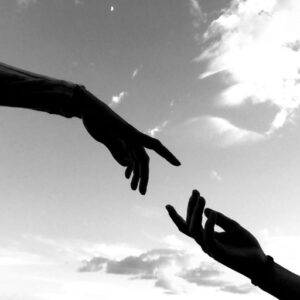
Do you suppose that this might be one of your more accomplished works? It’s terribly tight and tidy. At the same time, it is not. It holds two truths at once and refuses to choose between them. Mercy and violence. A recall to life, and a reckoning. The hand that saves and the hand that strikes. Both trembling, both fallible.
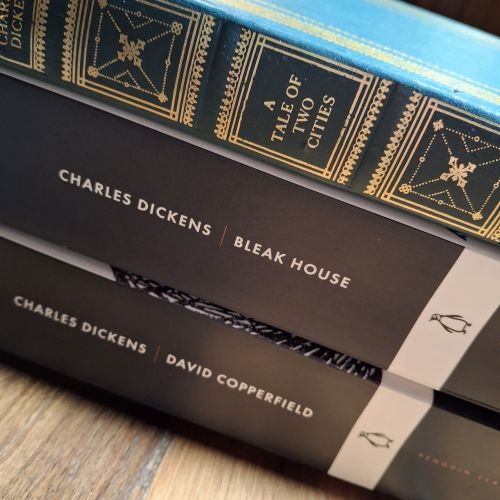
This book has been haunting me for as long as I can remember. I did not know how to answer it when it first called. I was a tween who loved reading, standing before a shelf of identical black spines, each marked with a small penguin perched at its base. I remember being drawn to them. I opened one with earnest curiosity, but I did not yet have the language to climb inside. I had an English tutor; I could have asked for help. I did not. Whether from lack of courage or simple uninitiation, I cannot say. She might have been my bridge. One question might have altered the texture of my teenage years. But I do not know what I do not yet know. So, I closed the book and the spine went back to its neat little corner. Untouched. Unread. Some faint tremor of recognition waited patiently for decades.
At seventeen, my world shrank into a cubicle on an Irish island. Teacher spoke. Pages turned. Revolutions were reduced to obedient paragraphs. The French revolution was half the history syllabus, heavy with French names, dates, and strangely light on meaning. I had questions but still, I did not ask. I was timid, wandering elsewhere, planting my feet on ground that I was getting acquainted with.
I did not understand then that the revolution was not confined to France. That once ignited, it travelled across Europe, across continents, across centuries rearranging ideas of power, justice, citizenship and the dangerous belief that history might be remade by ordinary hands. Hands shaped by hunger, fear, humiliation and long memory. The danger enters when those hands become certain, when they hold the pen alone, and when they believe that history owes them not justice, but revenge. You understood this tension intimately. You did not condemn the revolution; you distrusted its intoxication. And you trusted your readers enough to let the reckoning reveal itself. You let us feel it close.
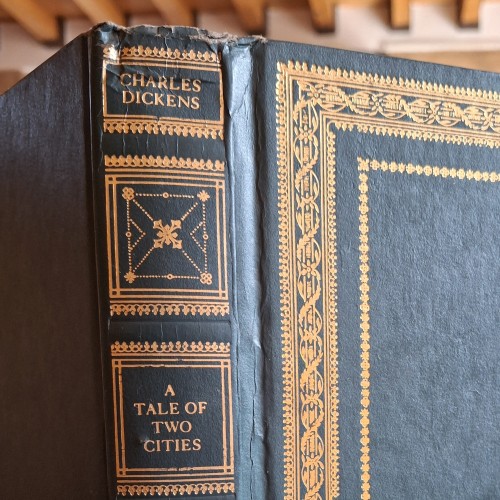
I remember seeing a copy of A Tale of Two Cities in a boarder’s cubicle like a small illicit universe. Her name was Arlene, a bright student in my history class and she had her sights on pursuing law. I imagine now what she may have gained from it then. A steadiness, a maturity that had arrived early. And I see, just as clearly, what I did not yet have the means to take in. For a long time it felt like my loss. I believe my life might have unfolded along a different line.
Another door opened up only much later, in a second-hand bookshop on Victoria Street in Edinburgh. Kafka found me there, of all people. A man who cracks open the ordinary until its madness shows. A man who teaches one that the world will deform you if you don’t first claim the shape of your own existence. Through him, literature drew me in and stayed. By then, I was already twenty-four.
I never understood that I needed The Tale at the time. I grew into it twenty-four years later. I arrived late, and for a long time I carried the feeling that something essential had slipped past me.
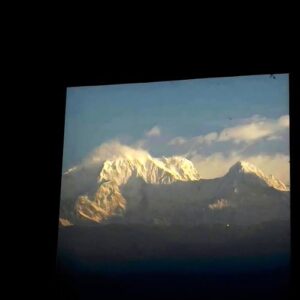
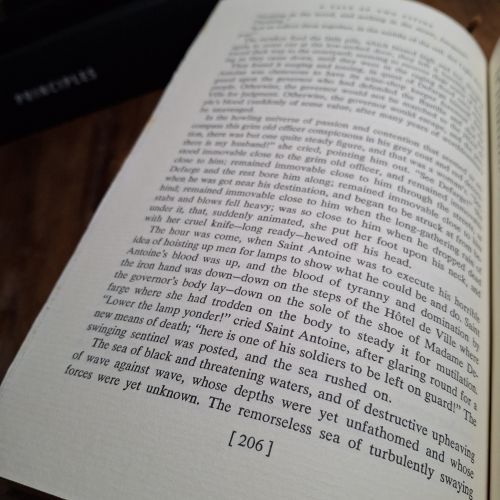
But missing out could just be another name for arriving on time for the life that would suit me better? Had I fallen in love with it at seventeen, I might have chased tidier certainties of life. I don’t know. But here I am in Nepal holding the very same book that I once held as a child, decades later, reading you not as a teenager trapped in a syllabus but as a woman who has lived enough to grasp what a revolution truly is. If I had read it then, perhaps it would have changed everything. But reading it now changes it in a way the girl at school could never have imagined.
I see how deliberate this book has always been; how delicately you place each moral weight, and how patiently it waits for the reader to arrive.
Paris becomes not a city but a stomach turned inside out. Hunger walks upright on two feet, clawing. When the wine casks break, people fall on their knees drinking from gutters, from cupped hands, from the cracks between the cobblestones. The red stains on their mouths gives its prophecy though no one knows it yet.
The world starts to crack open.
The Hundred Footsteps becomes the emotional barometer: hungry crowds pressing inwards; Madame Defarge’s death register knitted itself stitch by stitch, the anger of the mob rising; the Bastille breached; the tumbrils beginning their long roll towards the guillotine. Darnay’s fate tightens. Carton’s sacrifice takes its quiet shape. The snowball of consequences gathers weight. Somewhere above it all, a clean tear opens in the serene sky and the future begins to leak through.
Some books do not end and this is one of them. It hangs around in my head and settles into stitches. The narrative is unsettling and stirs many things that I cannot put into words but I do know that it will be lived. Just as Moby Dick left a significant mark after its final pages with a widening horizon, The Tale of Two Cities leaves a kind of beginning that seems to suggest a new threshold to something.
Perhaps, Mr Dickens, you did not abandon me.
Perhaps you waited for me to become large enough to carry it.
I begin to suspect that you knew better than I did. That you understood some books are not meant for the child who reaches too early, fingers stretched towards a language the mind cannot yet hold. That history itself must sometimes wait for a body capable of carrying its weight. In the way you crafted this book, history does not settle into explanation. It moves through lives, gathers consequences, rearranges the air. I imagine you watching readers arrive when they are able, letting the book do its slow, patient work, leaving no one untouched.
If so, thank you for your patience.
And forgive the late arrival.
Yours,
still listening for the footsteps on the stairs