Dear Big A,
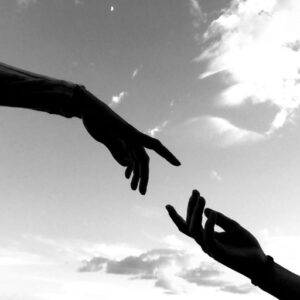
I am not standing at a crossroads about school. It is more like the point every parent eventually reaches whether she expects it or not, when the path that carried the child this far begins to thin out, the signposts grow fewer, and the child must begin, little by little, to cut his own trail through the forest. It is not alarming though it can feel that way at first. I suppose it is simply the sign that you are growing. Still, the forest is thick at this age, and when the trees stand too close together, it is easy to mistake movement for direction. One can walk confidently and yet not know where one is going.
I see the tension you feel between system-learning and self-directed learning, because once you have experienced freedom, it becomes difficult to return to a place where the work is chosen for you, the pace decided by someone else. But you must know that freedom changes its nature as one grows older. At ten, freedom is play. At fifteen, freedom begins to ask something in return. It asks for responsibility, for steadiness, for the ability to remain consistent, even after the excitement has faded. If that strength has not yet formed, freedom slowly turns into drift, and drift has a way of carrying a person much farther from himself than he ever intended to go.
It would be easy for me to decide for you, or at least pretend that I can see clearly enough to choose the right direction on our behalf. Parents are often tempted to do this, not because they are certain, but because uncertainty is uncomfortable. Yet I know that my role now is not to choose the road for you. I stand only a little further back, where the view is wider, and ask the kind of questions that may help you see beyond the feeling of the present moment. A decision made out of frustration, or boredom, or the desire to escape something difficult rarely leads where one hopes it will. A decision made with patience has a different weight to it because it comes from understanding rather than impulse.
Before anything is decided, some questions matter as a way of clearing the ground so that whatever choice you make stands on something solid. The first of these questions is the simplest, and perhaps the hardest to answer honestly. Why do you want to leave school, really? It is probably not the first answer that comes to mind, but the one that remains after you sit with it for a while. Five months ago, you chose school because you realised it opened doors to other possibilities. Yet five months of school is little time to test the grounds. So it is worth asking yourself whether something new is truly calling you forwards, something you feel the need to build with your own efforts or whether you are trying to move away from something that feels dull, confining or meaningless? Both feelings are real and both deserve to be taken seriously, but they are not the same. Leaving because you see a path ahead can be powerful. Leaving because you are tired of the road you are on can sometimes lead only to another road that feels the same.
Exploration comes easy but there comes a time when curiosity alone is not enough. Something in a person must learn to stay, to work, to return again and again to the same task even when it stops being interesting. If you step away from school, what would hold your attention long enough to change you? What would you continue even if no one reminded you, even if no one praised you, even if the work felt slow and uncertain? These are not questions to doubt your seriousness but to understand what kind of strength is already there, and what kind still needs to grow.


There is also a larger question. The one that sits quietly behind all the others. And that is the question of the kind of person you are becoming. What kind of life feels meaningful from the inside? Are you pulled towards security, influence, knowledge, adventure, or freedom? Each of these directions asks for its own preparation, and the difficulty is that we often want the life without wanting the discipline that makes it possible. Some lives ask for discipline early, some ask for endurance, some allow more wandering, but even wandering has its demands and not everyone who sets out without a map finds their way. The world does not shape itself around what we feel like doing in the moment, and part of growing up is learning which parts of ourselves must be strengthened to live the life we say we want.
No matter which path you take, certain abilities cannot be avoided. The ability to think clearly. To write and articulate well. To hold attention. To read deeply to see beyond the surface of things. To stay with work that feels tedious. To finish what you begin. These are life skills and every path demands them sooner or later. If you leave school, will you have the discipline to continue building them without the structure that forces you to practice them every day? You must decide when to wake, what to work on, how long to stay with it, how to measure whether you are moving forwards or only passing time. You must decide what to do on the days when nothing feels interesting, when no one is watching, when there are no deadlines, no exams, no peers beside you. Even adults drift in such conditions because the world is full of distractions.
You have only recently begun to live inside school among boys your age and the world that forms behind the rules. The newfound friendships, the nonsense behind the scenes, the daily football, the small alliances and rivalries, the sense of belonging to a tribe. They are part of how you have learned the language of the world, how you measure yourself against others, how you discover the kind of person you might become. If you step away now, would you not miss that companionship, that imperfect camaraderie that is also shaping you? You may not realise how much you will miss the noise of others until it is gone.
Finally, I hope that the different kinds of learning you have experienced has widen your map. Acton gave you self-direction within a structure and taught you to think for yourself. Unschooling held space to explore, to follow curiosity without fear, to discover deeply what interests you. Boarding school gives you something else entirely, something that may not seem to have relevance to you while it is happening but has its own value. Friction. It asks you to continue even when the work feels tedious, to show up when you are not inspired, to carry weight that you did not choose. This kind of friction builds stamina and stamina is what makes freedom possible later.
So the question is not whether leaving school would be right or wrong. The real question is whether you have built enough strength to hold your own structure without the system holding it for you. Freedom sounds light when we speak freely about it but, in practice, it is heavy because every decision rests on you. You must decide when to begin, when to stop, when to continue, when to endure, when to change direction. I suppose there is no right age for it, only readiness.
We are not deciding your future right now. Only that we are trying to understand what kind of road will make you grow, and what kind might allow you to drift without realising it. If we can see that clearly, the decision itself will not feel like a crossroads but simply the next step in a path that is becoming your own.
Love,
Mum